
Creating a dedicated spot for reading can transform how you unwind at home. A reading nook is a small section of a room designed for relaxation, typically featuring a comfortable seat and often bookshelves. Most people think building a cosy reading nook requires major renovations or a dedicated room. Wrong. The best reading spaces are carved from forgotten corners with a few strategic upgrades that prioritize comfort and light.
Whether you have an unused bay window, a narrow alcove that currently collects dust, or wasted space under your stairs, a well-planned nook invites you to sit down, slow down, and lose yourself in a good book. Here are some cosy reading nook ideas to inspire your own reading corner of calm.
Pick Your Perfect Corner
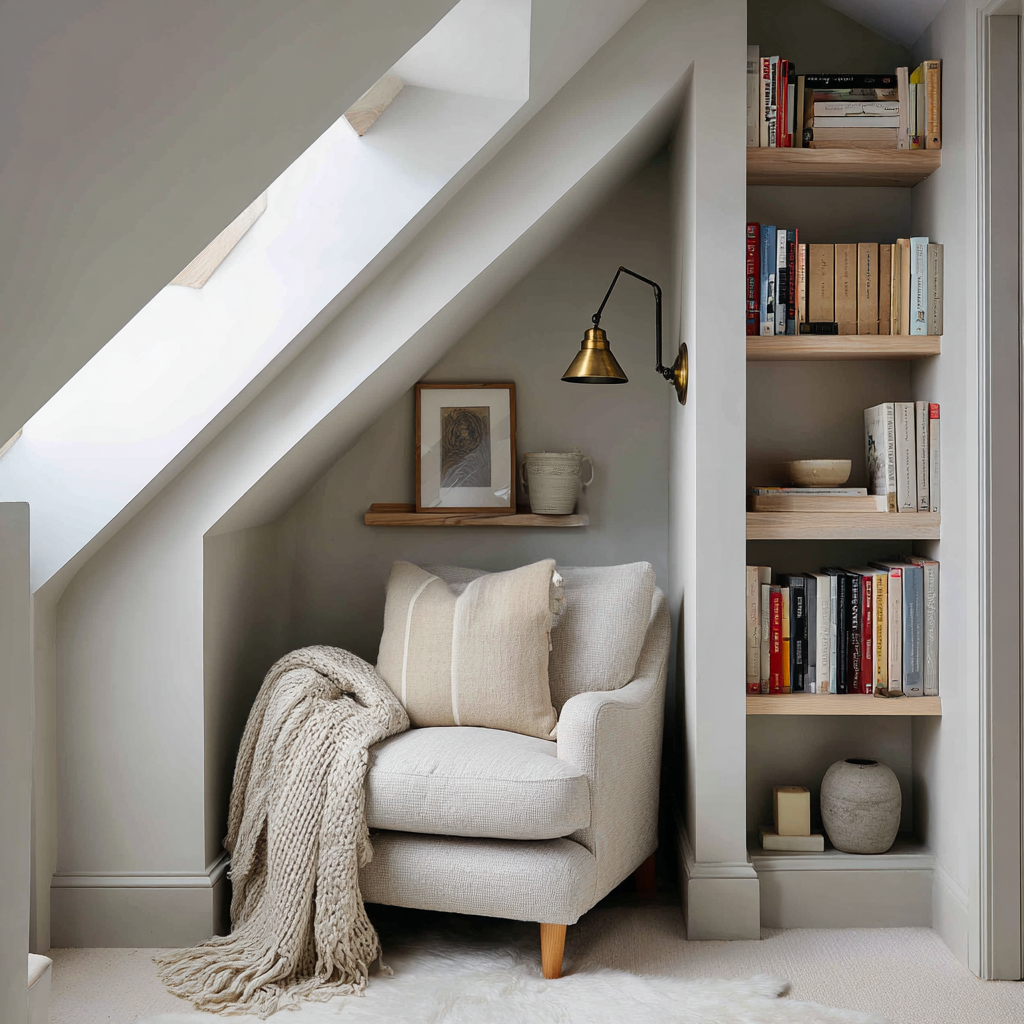
The location you choose for your cozy reading nook sets everything else in motion. You need natural light during the day and enough space to stretch your legs without feeling cramped.
Best spots to consider:
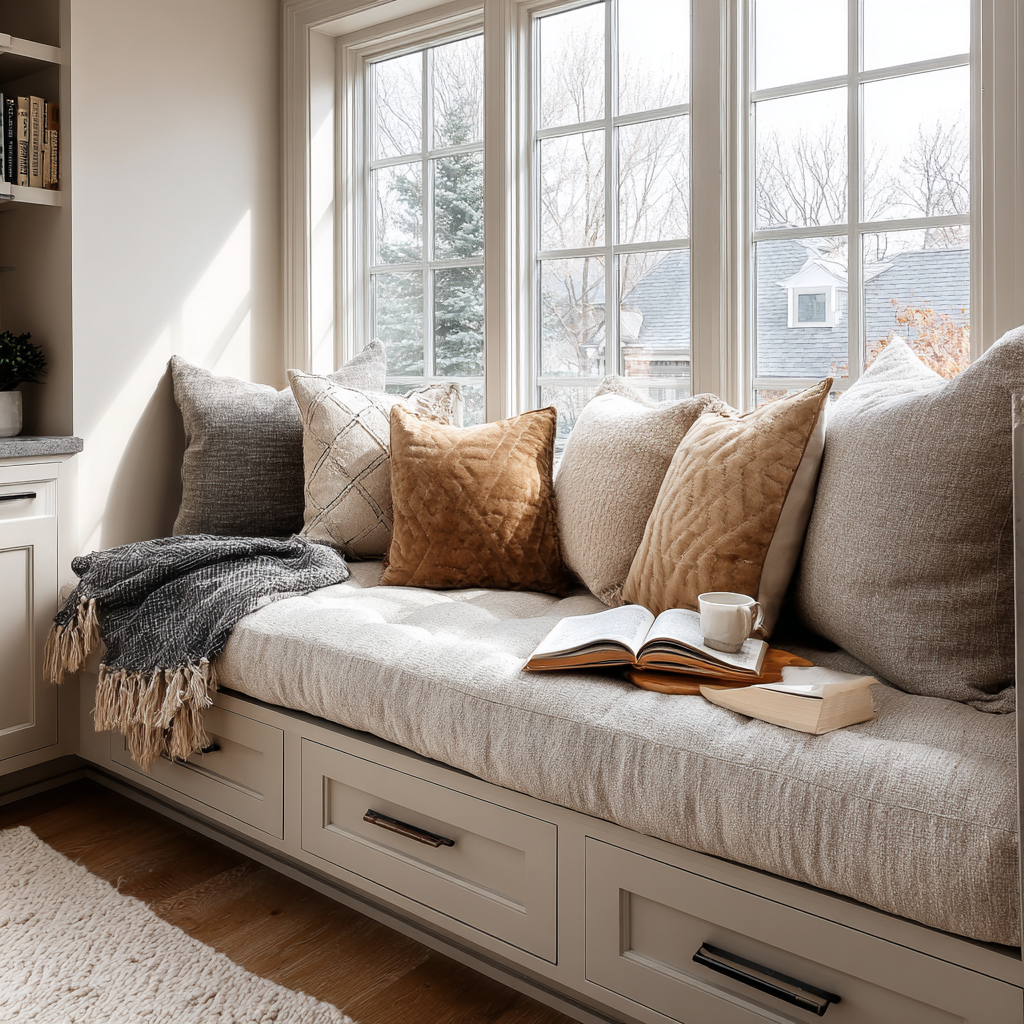
- Bay windows or window alcoves – Built-in light, a sense of enclosure and a view make these ideal. Add a cushioned window seat bench with storage underneath and you’re halfway done.
- Unused corners in bedrooms – Away from high-traffic areas, an unused corner offers natural privacy and quiet. The perfect place to add a comfy chair, soft lighting and your favorite books.
- Under staircases – Often wasted space, but perfect if you have a small house and limited space. With the right lighting, a snug chair or a built-in bench, these become cosy hideaways. As a bonus, the angled ceiling creates a naturally cocooning feel,
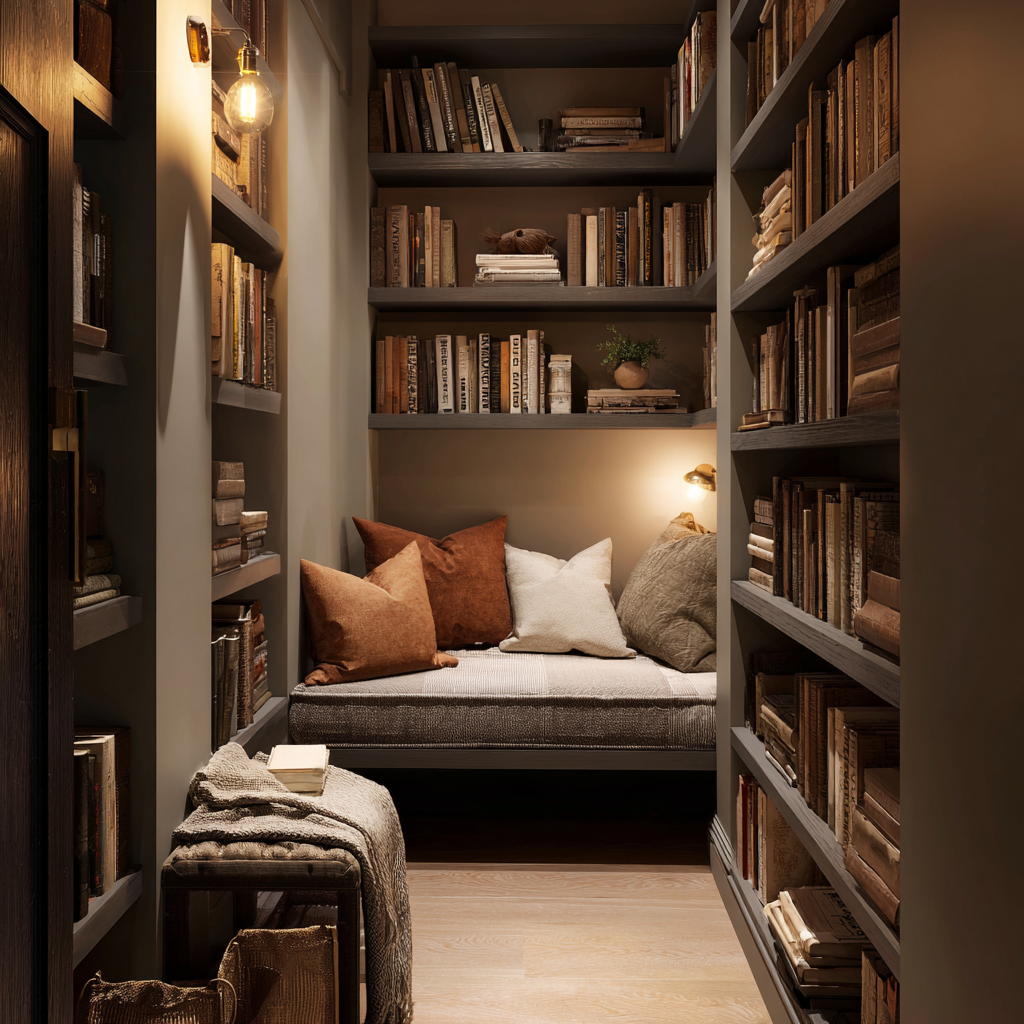
- Walk-in closets – If you have an unused closet, remove some hanging rods and transform it into a mini library nook.
- Awkward living room corners – That spot behind the sofa or next to the bookshelf that never gets used? That’s your reading corner.
- Chimney breast alcoves – A single chair and a small wall-mounted shelf can turn a narrow alcove into a fully functional reading spot. The key is to keep the furniture minimal so the space does not feel cramped. For a unified look, consider wrap-around bookshelves painted the same colour as the room. This approach helps the nook blend seamlessly into the architecture rather than feeling like an afterthought.
Avoid high-traffic areas like hallways or spots near the TV. You want separation from noise and distractions, not a front-row seat to household chaos.
If you have a spare room, you can dedicate the entire space to reading without competing for floor area in your main living spaces. This is a practical solution for anyone who craves a quiet retreat but does not want to sacrifice valuable square footage in a busy family room or lounge and offers the luxury of a whole room dedicated to reading.
You can furnish it with a comfortable armchair, a side table, a footstool, and a rug, just as you would a smaller nook, but with the added benefit of closed-door quiet. It also gives you room for larger bookshelves if you have an extensive collection.
Choosing Comfortable Seating
This is where most reading nooks fail. Your chair or cushion setup needs to support long reading sessions without making you fidget or adjust every ten minutes.
Three seating options that actually work:
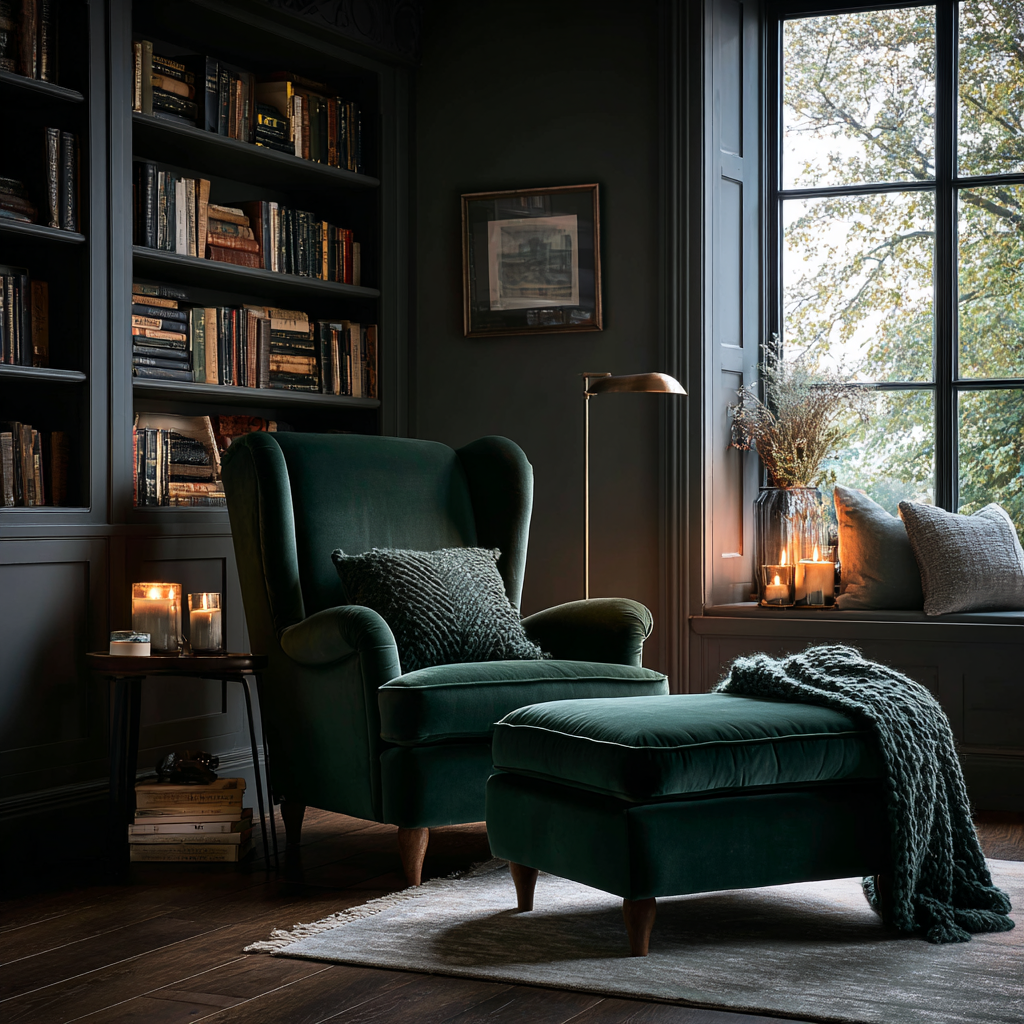
- Oversized armchair with a footstool or an ottoman – Go deep and plush. You want something you can curl up in, not perch on. Pair it with a footstool or ottoman so you can stretch out fully.
- Floor cushions with back support – Perfect for tight spaces. Stack large floor pillows against the wall and add a lumbar cushion for lower back support.
- Window bench with thick cushions – If you’re using a window nook, install a bench or buy a storage bench that doubles as seating. Top it with a 4-inch thick cushion at a minimum.
Top tip: Choose fabrics that feel good against bare skin. Velvet, linen, and soft cotton blends beat synthetic microfiber every time. If your nook gets direct sunlight, go with fade-resistant materials or add blackout curtains you can pull when needed.
Test your seating for at least 30 minutes before committing. If your back hurts or your legs go numb, keep looking.
Layer Your Lighting
Natural light is perfect until the sun sets. Then your cosy corner turns into a dim cave where you strain to see the words on the page.
You need three layers of light:
- Ambient lighting – A ceiling fixture or wall sconce that provides general illumination without being harsh.
- Task lighting – A focused reading lamp positioned next to or behind your seating. Adjustable arm lamps or clip-on book lights work best.
- Accent lighting – String lights, candles, or a small table lamp that adds warmth without contributing to reading light.
Brightness matters. Look for bulbs in the 2700K to 3000K range (warm white) with at least 450 lumens for your task light. Anything cooler feels clinical. Anything dimmer makes you squint.
Position your task light so it shines over your shoulder onto the page, not directly into your eyes. Side lighting or behind-the-shoulder placement eliminates glare and reduces eye strain during long reading sessions.
Add Functional Storage
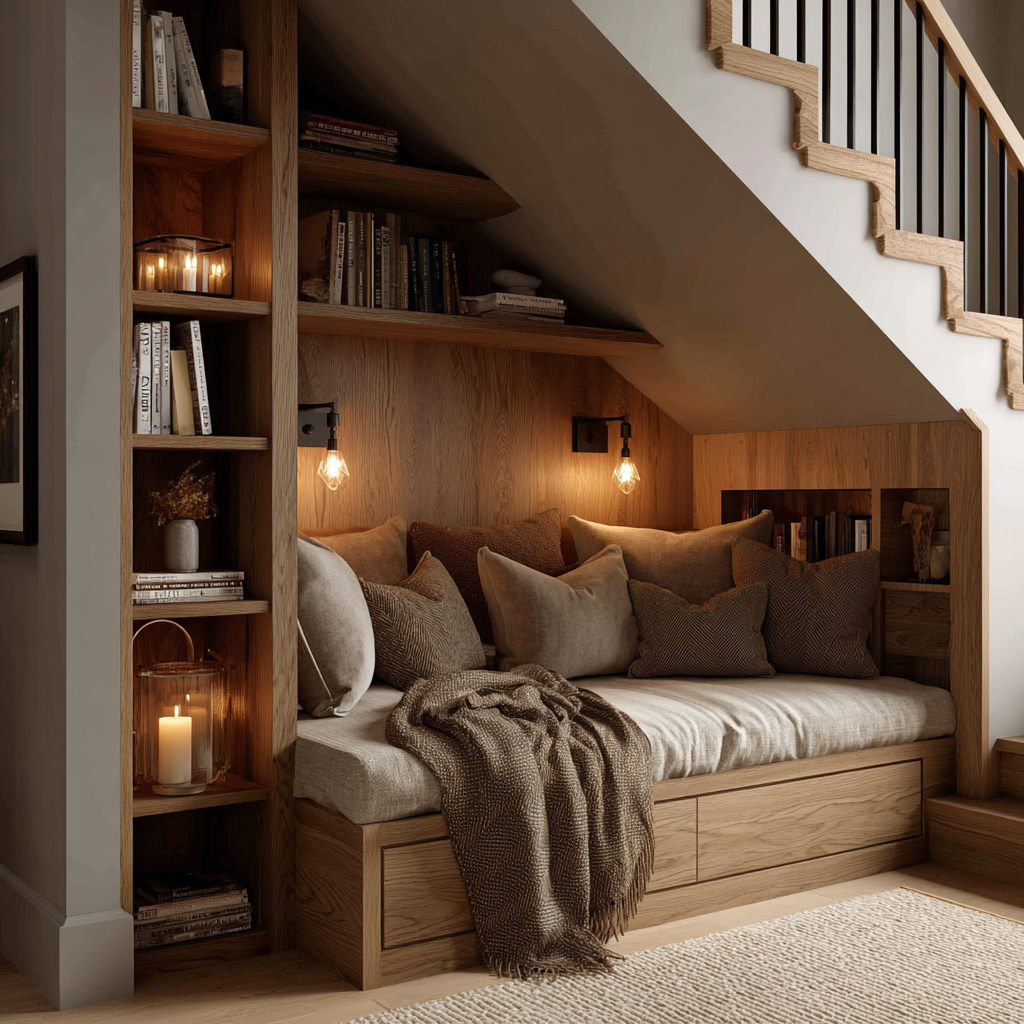
Books pile up fast. Without a place to stash your current reads, bookmarks, reading glasses, and tea mugs, your nook becomes cluttered chaos instead of a calm retreat.
Smart storage solutions:
- Floating shelves above or beside your seating – Keeps your current reading stack within arm’s reach.
- Storage ottomans – Hide blankets, extra pillows, and books you’re not currently reading.
- Small side tables with lower shelves – Surface space for drinks and a lamp, storage below for books and magazines.
- Wall-mounted magazine racks – Takes up zero floor space and keeps periodicals organized.
- Baskets tucked under benches – Perfect for throws and larger books.
Keep your active reading pile to five books maximum. Anything more creates decision fatigue every time you sit down.
Make It Personal
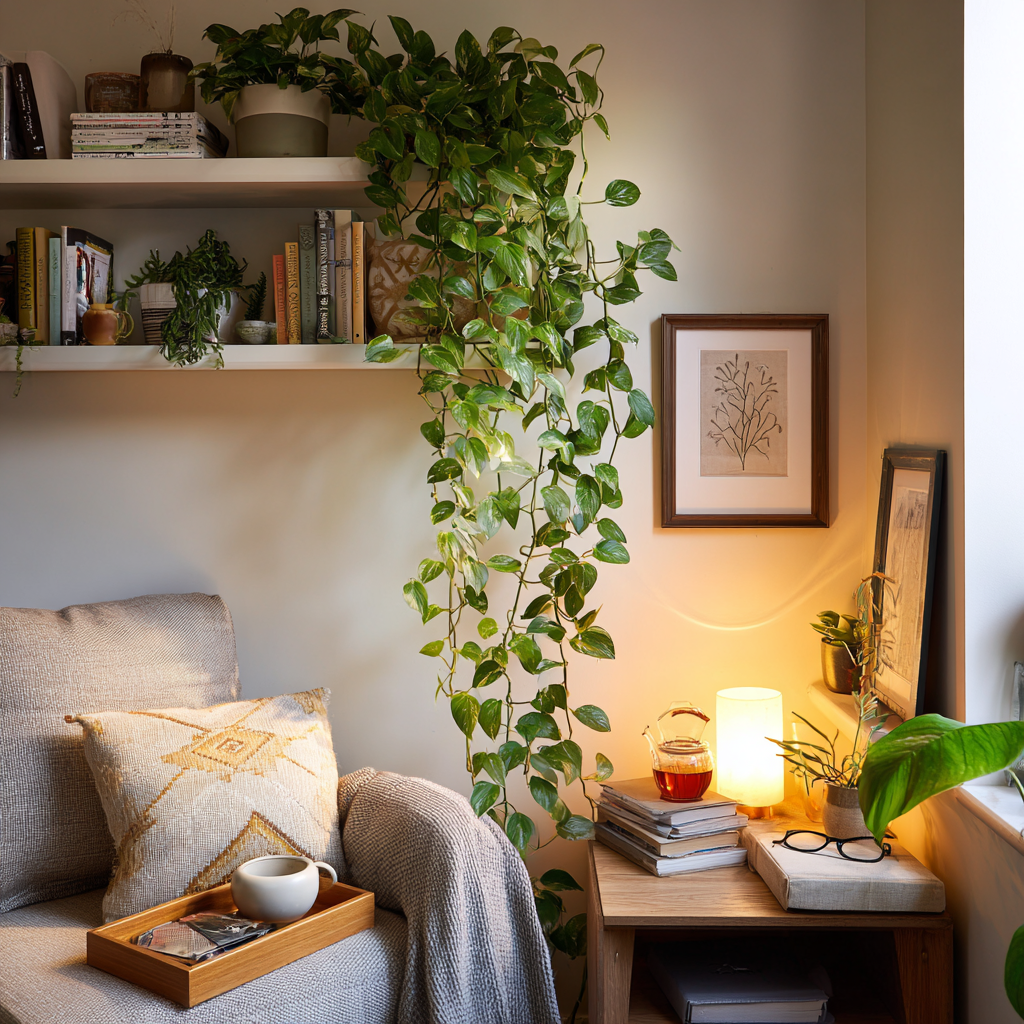
The difference between a cozy nook and just a chair in a corner comes down to the details that make the space feel like yours.
Soft textiles are what transform a functional seat into a cosy reading nook. Add texture with throws and pillows. A chunky knit blanket and a few linen or velvet pillows instantly make the space feel more inviting. Go for colours and patterns that calm you, not what looks good on Instagram.
Include a small plant. A potted fern, snake plant, or trailing pothos adds life without requiring much maintenance. Real plants beat fake ones for air quality and mood boost.
For a perfect spot, consider adding:
- A small piece of art on the adjacent wall
- A scented candle or essential oil diffuser
- A small tray for tea or coffee
- A journal or notebook for thoughts while reading
- Noise-canceling headphones if your household tends to be loud
The goal is creating a sensory experience that signals to your brain: this is where we read and relax.
Common Mistakes to Avoid
Even with the right location and seating, small missteps can ruin the cosy factor you’re going for.
Don’t sacrifice comfort for aesthetics. That Instagram-famous rattan chair might photograph beautifully, but if it’s not comfortable for more than 20 minutes, it’s useless. Always prioritize how it feels over how it looks.
Don’t skimp on cushions. Thin padding on benches or window seats guarantees you’ll never use the space. Invest in thick, quality cushions that hold their shape.
Don’t ignore temperature control. A nook by a drafty window in winter or in direct sun during summer won’t get used. Add weatherstripping, curtains, or a small space heater or fan as needed.
Don’t clutter the space. A reading nook should feel open and breathable, not stuffed with every decorative item you own. Keep surfaces clear except for what you’re actively using.
Don’t forget about sound. If your nook is near noisy areas, add a white noise machine, soft background music, or sound-dampening elements like thick curtains, rugs, or upholstered furniture.
Your reading nook should make you want to stay, not make you count the minutes until you can move somewhere more comfortable.
Creating a Reading Nook for Children
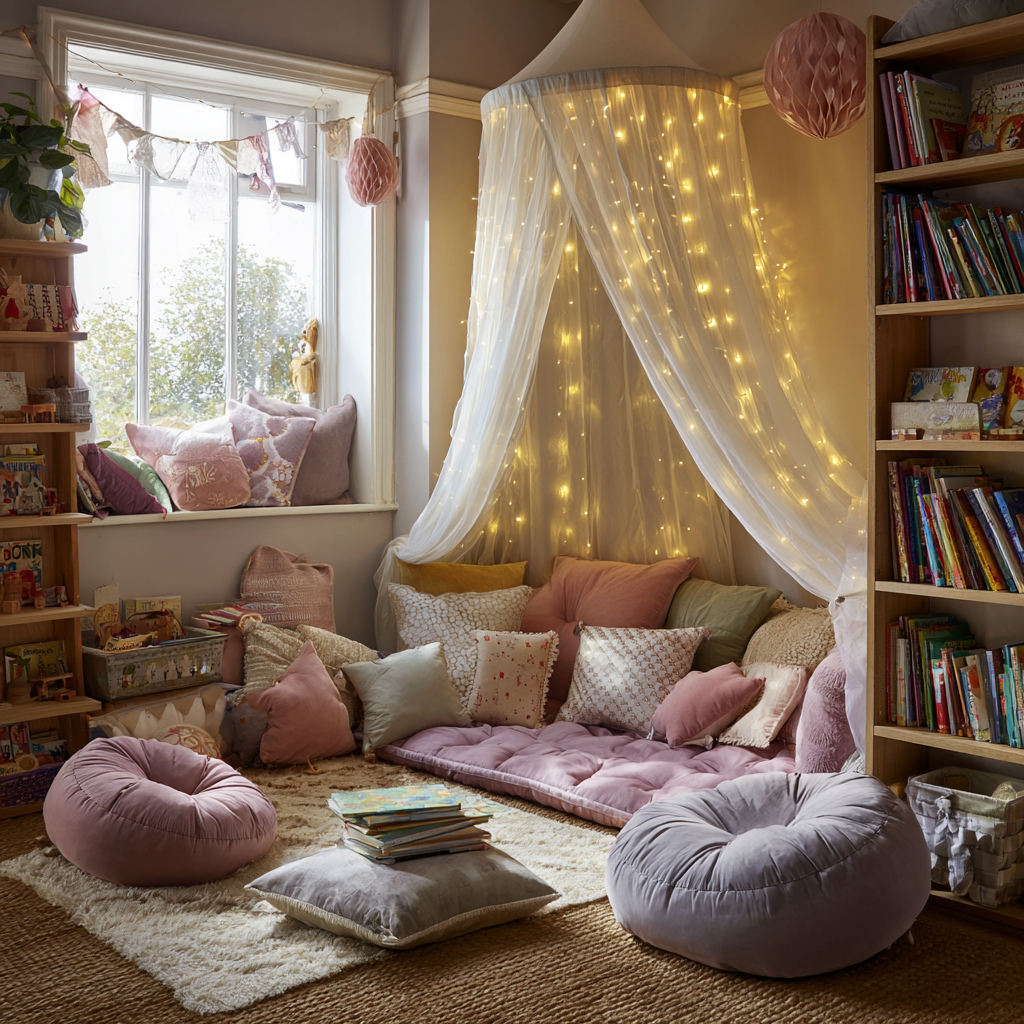
Children benefit from their own reading corner too. Use rich colours and soft textiles to make the space feel inviting and playful. Include storage solutions like a storage bench so books can be stored neatly and accessed easily.
A small, low-level chair or a pile of floor cushions works well for younger readers, and a nearby shelf or cubby keeps the books organised. The aim is to create a comfortable place that feels like their own cosy retreat.
Final Thoughts
The best cosy reading nooks aren’t built in a weekend. They evolve as you use them and figure out what works. Start with the basics (seating, lighting, location) and add personal touches over time. The goal is simple: create a space so inviting that choosing a book over your phone becomes the easy choice. Build your book corner right, and you’ll wonder how you ever read anywhere else.
Frequently Asked Questions
What is the minimum space needed for a reading nook?
There is no fixed minimum size. A reading nook can be as small as a single armchair in an alcove or a narrow bump-out. The key is to choose seating that fits the space comfortably and to keep furniture minimal so the area does not feel cramped.
Do I need to include bookshelves in a reading nook?
Not necessarily. A reading nook is for relaxation and reading, and while it often includes bookshelves, they are not a requirement. A small side table for your current book and a cup of tea may be enough, especially if floor space is limited.
What type of lighting is best for a reading nook?
Task lighting is recommended because it directs light onto the page without glare. A floor lamp, wall-mounted swing-arm light, or a rechargeable USB bulb are all practical choices. Overhead ceiling lights alone are usually not sufficient for comfortable reading.
Can I create a reading nook in a room I already use for other purposes?
Yes. A rug, a comfortable chair, and a side table can define a reading nook within a living room, bedroom, or even a hallway corner. You do not need a separate room. Using an alcove or a bay window helps the nook feel distinct without taking over the whole space.
What furniture is essential for a cosy reading nook?
The essentials are a comfortable armchair, a side table, a footstool, and a rug. The armchair is the most important piece for comfort. A footstool helps you relax, and a side table keeps your book and drink nearby. A rug visually anchors the nook and adds warmth underfoot.

