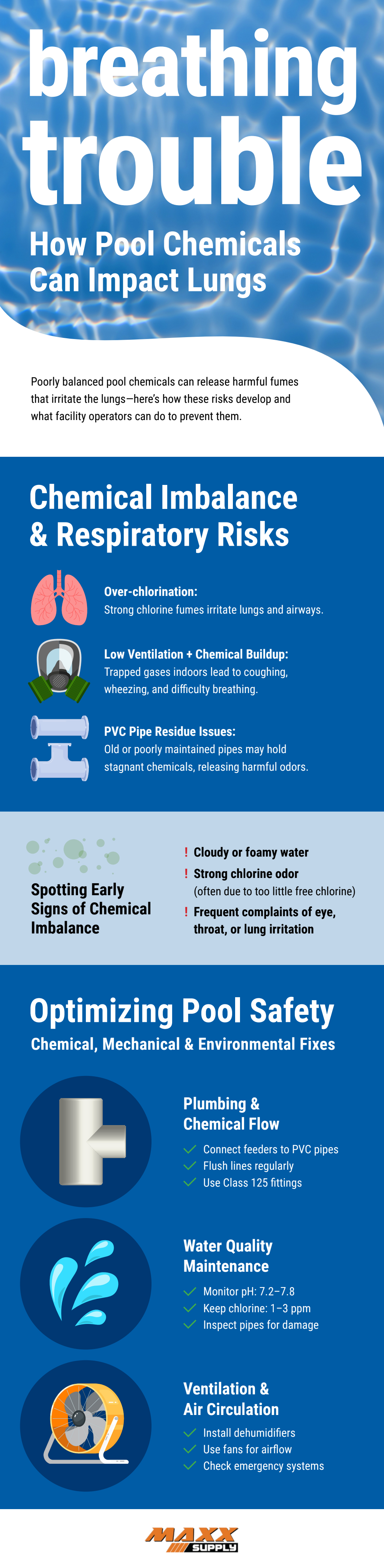
Many homeowners focus on keeping pool water clear and sanitized, yet few think about what happens once chemicals leave the water and enter the air. Pool maintenance products keep bacteria in check, but they can influence indoor and outdoor air quality in ways that directly affect the lungs. Families who spend long hours near the pool, especially children or older adults, may experience irritation without recognizing the source.
How Pool Chemicals Become Airborne

Chemical disinfectants keep water safe, but as they react with organic matter like sweat, sunscreen, and leaves, they form byproducts that rise into the air. Chloramines are among the most common. These compounds irritate the respiratory system and are responsible for that strong “pool smell” many people associate with cleanliness. The smell signals that the water chemistry is off-balance and that airborne irritants are increasing.
Improperly fitted equipment connections can contribute to chemical release as well. A cracked line or loose joint may allow fumes to escape. Homeowners who maintain their own systems sometimes use basic plumbing items such as Schedule 40 couplings, and if these are installed incorrectly, they can allow leaks that affect air circulation around the equipment.
Immediate Effects on the Respiratory System
The lungs react quickly to airborne pool chemicals. Short-term exposure often causes coughing, a scratchy throat, or a tight sensation in the chest. Some people feel their eyes and nasal passages burn, a sign that the mucous membranes are irritated. Children may display these symptoms earlier because their respiratory systems are more sensitive and they inhale more air relative to their body size.
People with asthma or chronic respiratory concerns face a higher risk. Even a mild chemical imbalance can provoke flare-ups, making it essential to maintain stable water chemistry and good ventilation.
Long-Term Concerns for Frequent Swimmers
Repeated exposure to poorly managed pool chemicals can influence lung function over time. Indoor pools with limited ventilation concentrate fumes, increasing the likelihood of chronic irritation. Some studies suggest that long-term chloramine exposure may affect the airway lining and contribute to conditions similar to occupational asthma.
Homeowners with indoor pools should pay close attention to humidity control, airflow, and equipment condition. Outdoor pools are less confined, yet calm weather, covered structures, and enclosed yards can still trap fumes.
Reducing Lung Irritation Around Pools
Preventing airborne chemical issues begins with consistent water testing and proper dosing. Balanced water produces fewer irritating byproducts and keeps disinfectant levels stable. Showering before swimming reduces organic matter that reacts with chemicals. Strong odors should be treated as a warning sign rather than a normal pool characteristic.
Regular equipment checks also help. Pumps, filters, and chemical feeders should be inspected for leaks or worn parts. Ensuring secure pipe connections and proper ventilation in pump rooms limits unnecessary exposure for anyone servicing or enjoying the pool.
Thoughtful pool care protects more than water clarity. It shields the air your family breathes and supports a safer, more enjoyable time spent outdoors or in the pool house. Look over the infographic below to learn more.